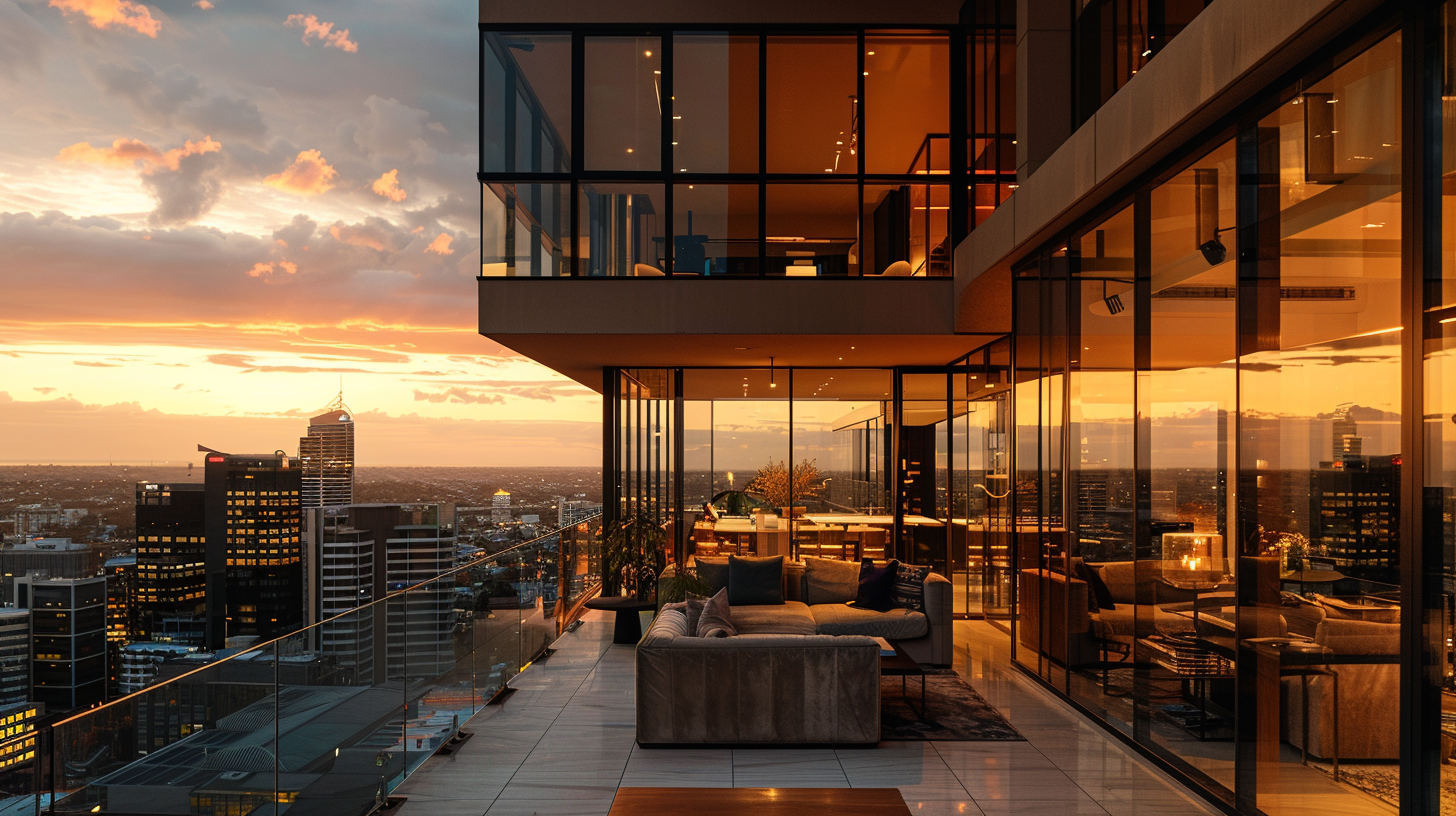
The Mirage of Price and Perception
Luxury real estate in Australia has entered a paradoxical era. Record-breaking sales keep making headlines, yet a quiet truth runs underneath: not all high-end apartments appreciate in value.
For every waterfront penthouse that doubles in a decade, there’s another that stagnates, or worse, slides backward. The illusion persists because prestige pricing, design gloss, and postcode alone are no longer guarantees of capital growth.
Today’s luxury property market is sophisticated, oversupplied in parts, and ruled by perception as much as fundamentals. The result? A widening gap between projects that truly hold long-term value and those that look expensive but perform like mid-tier stock.
The Numbers Tell the Story
Data from CoreLogic shows that between 2013 and 2023, Sydney’s top quartile of apartment sales outperformed the market by only 0.6 percent annually—far less than many investors assume. Within that band, the difference between top-tier projects can be stark. Apartments in tightly held, low-density developments with enduring architecture saw average growth of 80 percent over the decade, while larger prestige complexes often grew by less than 25 percent.
The reason is simple: supply and sentiment now move faster than brand names. Buyers at the upper end are increasingly discerning, and resale performance depends less on the price tag and more on what the property truly represents—authentic design integrity, livability, and cultural currency.
The Three False Signals of Value
Price as Proof:
Many investors equate price with intrinsic worth. But in prestige markets, price often reflects the developer’s ambition, not the property’s underlying fundamentals. A penthouse asking $8 million might sit unsold for two years while a $5.5 million residence in the same postcode sells within weeks—because one connects emotionally and spatially, and the other simply performs theatrically.Amenities Over Substance:
Pools, saunas, and concierge services photograph well, but they rarely drive long-term capital appreciation. They add cost, not necessarily value. What endures are orientation, light, cross-ventilation, privacy, and floor-plan logic—qualities that matter when resale buyers are walking through the space, not scrolling through marketing renders.Brand Over Belonging:
High-profile architect collaborations can raise awareness but sometimes fail to deliver longevity. A building that truly becomes part of a suburb’s identity, integrated with its streetscape, community, and ecology; outlasts the hype of limited-edition branding.
What Actually Drives Appreciation
If prestige pricing doesn’t guarantee growth, what does? The answer lies in three interlocking forces: scarcity, design truth, and trust.
Scarcity comes from more than postcode, it’s created by enduring site conditions. Genuine north light, walkable proximity to amenity, and low-density zoning form the invisible moat around lasting value.
Design truth is about authenticity and proportion. Apartments that “feel like homes” consistently outperform. Buyers are willing to pay—and keep paying—for calm, spacious, human-centered architecture that wears well with time.
Trust sits at the intersection of transparency and reputation. Projects led by developers with consistent delivery, clear communication, and integrity in pricing create buyer ecosystems that self-sustain. Repeat purchasers, referrals, and resale premiums all spring from credibility earned, not marketed.
The Hidden Cost of Oversupply
Luxury investors often forget that prestige can be overbuilt. Across Sydney, dozens of high-end apartment projects have launched simultaneously in the past five years, each competing for a finite pool of buyers. The result has been an illusion of exclusivity in an environment of excess.
Unlike mid-market buyers, ultra-premium purchasers move cautiously and often only once per decade. They have emotional patience, not transactional urgency. When too many developments chase too few buyers, values flatten—even at the top.
As one analyst put it: “Luxury is the first to stall and the last to recover.”
Lifestyle Over Luxury
The emerging pattern across global prestige markets, from Sydney to Los Angeles to London, is clear: the best-performing assets are not the most lavish, but the most livable.
Buyers now seek properties that reflect values, not vanity. Energy efficiency, timeless materiality, acoustics, and a sense of quiet privacy are outperforming high-gloss spectacle.
A new generation of luxury investors (many under 50) are buying differently. They care about flexibility, sustainability, and digital amenity. They want homes that feel relevant to modern life, not relics of old prestige culture.
Real Estate Projects and the New Standard of Value
At Real Estate Projects, we’ve seen this shift firsthand. The developments that capture sustained buyer interest share one thing: a strong story rooted in both place and purpose.
Our platform was designed to make that distinction clear. We feature projects with genuine scarcity, design quality, and transparency—so buyers can evaluate not only finishes and price guides, but the underlying credibility of the teams and vision behind them.
As the market evolves, Real Estate Projects serves as both a showcase and a filter: a way to separate illusion from value, and to give discerning buyers confidence in what they’re purchasing.
Because in the decade ahead, the smartest investment will not be the flashiest apartment, but the most honest one.
The Quiet Return of Substance
If the last property cycle was about spectacle, the next will be about substance.
Buyers, developers, and agents who understand that shift, and act accordingly, will define the next generation of Australian premium living.
True luxury has always been simple: enduring beauty, proportion, and integrity.
The rest is just marketing.