Part One: Julianne's Story
A Career of Care
Before stepping into real estate, I spent more than twenty years in healthcare, counselling, and applied psychology. My days were filled with listening to people at critical moments in their lives — illness, change, transition. It was demanding, rewarding work, but after two decades I found myself craving a new challenge.
I had never worked in an office or sales environment. I wanted to stretch myself in a completely new way, to see how my skills would translate beyond healthcare. Real estate was not an obvious choice — but when the opportunity arose, I could see clearly how the two worlds might intersect. Buying and selling property is, after all, one of life’s biggest decisions. It stirs up fear, hope, nostalgia, and uncertainty in equal measure. It struck me that my counselling background might bring something different to the table.
A Woman’s Perspective in a Male-Dominated Space
There was another dimension, too. When I first joined the family business, I quickly realised there was a noticeable lack of female voices in the room. Statistically, women are involved in at least half of all property purchases, often more. Yet the conversations, the campaigns, the assumptions — they were often shaped by men.
I felt strongly that I could bring a fresh perspective, one that acknowledged the emotional weight of property decisions. Women approach these choices differently. They tend to think about family, lifestyle, and community as much as investment. By stepping into this space, I wanted to give voice to that perspective — not only for our clients, but for the culture of our business itself.
Downsizing, Early and Reluctant
Not long before I made this transition, my husband and I had taken a step that many of our clients would later consider: downsizing. We moved from a large family home into an apartment.
At the time, I wasn’t ready. If I’m honest, I wanted to hold onto the symbol of the family home. That house was where we had raised our children, where so much of our identity as a family was held. I wanted to marinate in that space a little longer, to cling to the physical reminder of the years when motherhood and domestic life defined me.
Financially and practically, though, downsizing was unavoidable. The upkeep of the big home had become relentless, the merry-go-round of maintenance and responsibility never-ending. And so, somewhat reluctantly, we moved.
Looking back now, I wouldn’t have it any other way. Downsizing freed me in ways I hadn’t anticipated.
What Downsizing Made Possible
For me, downsizing was not just a practical decision — it was a profound life transition.
It unchained me from the endless cycle of keeping a large house running. Suddenly, my energy was no longer consumed by mowing lawns, cleaning rooms we barely used, or maintaining spaces that had once been full but were now emptying as our children grew up.
More importantly, it freed me personally. Downsizing marked the end of the young family years and facilitated the transition into a new stage of life: being the parent of adult children. It meant I had more time for myself. More permission to explore, create, and re-engage with parts of myself that had been on pause during the intensity of motherhood.
The foundation of motherhood and domesticity shaped me, but it didn’t encapsulate all of me. Downsizing gave me back the space — both physical and psychological — to rediscover what else my life could be about.
This is why I speak so passionately about downsizing with our clients today. I know the ambivalence, the resistance, the grief, and also the incredible freedom that follows.
Meeting People Where They Are
When I sit with downsizers now, I can see myself in them. Many are between 60 and 75 years old, weighing the decision to release the family home. Some are eager, some are cautious, and many are somewhere in between.
One of my strengths, drawn from my years in counselling, is meeting people where they are at. Not rushing them. Not selling to them. Simply listening. Helping them name the stage they are in, the emotions they are carrying, and the vision they are starting to form for their next chapter.
I admire downsizers greatly for their diligence, their patience, and yes, their reservations. They are not impulsive buyers. They take their time, and rightly so. My role is to walk alongside them, supporting both the practical side of the process — the bricks and mortar, the contracts and inspections — and the human side, the grief and possibility of transition.
From the Office to the Open Home
What I’ve found is that the interpersonal skills that shape counselling also shape culture. Within our office, I focus on creating an environment of empathy and support. That flows naturally into how we meet clients. When a buyer walks into an open inspection, they don’t want to feel processed — they want to feel seen.
Real estate culture is always evolving, and if we want to remain relevant, we have to evolve too. That starts on a personal level. How we treat each other at work is how we treat our clients. And how we treat our clients is how they remember us — not just as salespeople, but as people who stood beside them during one of life’s major events.
Looking Back, Looking Forward
My own downsizing came earlier than expected. At the time, I resisted it. But in hindsight, it gave me the gift of perspective, and the chance to bring authenticity into my work. When I speak with downsizers, I am not theorising. I am speaking from lived experience — from the ambivalence and the grief, but also from the liberation and renewal.
That experience, combined with my counselling background, has given me a unique lens as a director at realestateprojects.au. My focus is not just on sales or stock, but on the people behind them. The psychology of property. The transitions that define us. The ways in which a house is never just a house, but a vessel of memory, identity, and possibility.
This is the story I bring into every role I hold — as a director, as a licensed agent, as a colleague, and as someone who has walked the path of change myself.
Part Two: Psychology & Property
Introducing the Psychology & Property Series
When I stepped into real estate after twenty years in healthcare and counselling, I quickly saw that property decisions weren’t just financial — they were deeply human. Buying or selling a home stirs memory, identity, belonging, fear, and possibility.
That insight is what inspired me to create the Psychology & Property series. In this series, I’ve explored some of the key themes, questions, and moments of growth that come up during the downsizing journey and in the broader world of premium property.
My hope is that these pieces help people engage more deeply with their own experiences — to see that the resistance, the emotions, and even the excitement they feel are natural. And more than that, I hope the series offers support: a reminder that this transition is not just about bricks and mortar, but about shaping a life that reflects who you are becoming.
Downsizing as a Life Event
Most people think of downsizing as a transaction: selling one property, buying another. But for the majority of our clients, it is something far larger. It is a rite of passage. A transition from one life stage into the next.
In counselling terms, it carries the same weight as retiring, becoming a parent, or entering a new relationship. It reshapes identity, relationships, and purpose. This is why downsizing feels so hard for so many — because it is not simply a move, it is a transformation.
The Invisible Weight: Why Letting Go of the Family Home Feels So Hard
Belonging and Place
For downsizers, the question is not only where will I live? but where will I belong?
The choice of suburb, the feel of a community, the walkability of a village — these factors shape how people imagine their future selves. In psychology, we call this “place attachment,” and it is one of the strongest drivers of wellbeing.
Belonging and Place: Why Community Drives Downsizer Choices
Home as Mirror
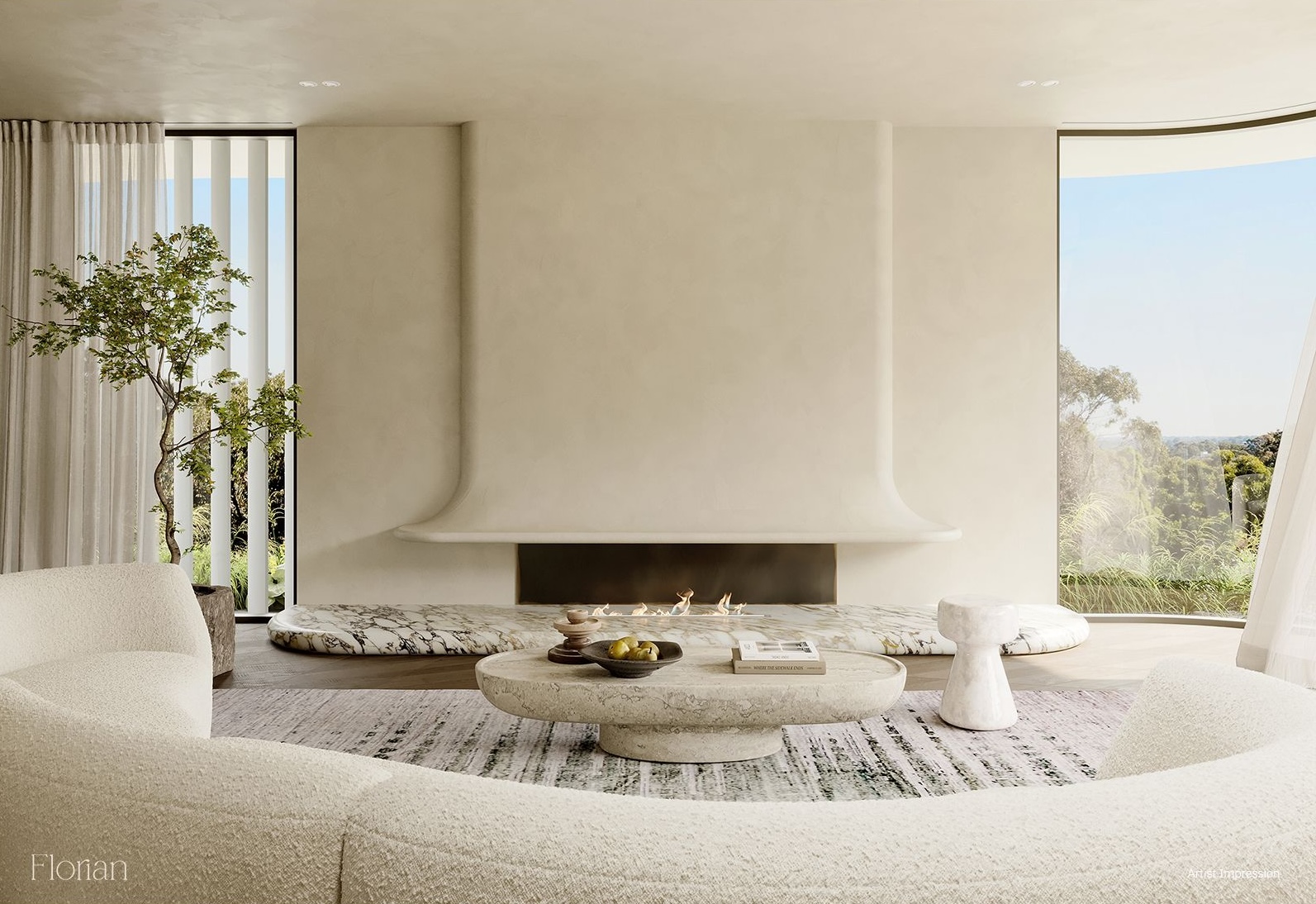
Homes aren't neutral; they reflect identity. What we keep, display, and let go of are quiet statements about how we see ourselves (and who we're becoming). For many downsizers, the edit is as psychological as it is practical-decluttering becomes self-discovery, and choosing a new place is an act of authorship. The most supportive projects invite that reflection: flexible spaces, honest materials, good light, proportions that feel calm rather than performative. When the home mirrors the person—not a trend-buyers feel at ease stepping into their next chapter.
Home as Mirror : What Our Living Spaces Reveal About Us
Family Dynamics and Invisible Work
Downsizing often involves not just the individual but their family. Children, siblings, even extended relatives may weigh in — sometimes helpfully, sometimes less so. I see my role as helping families navigate these dynamics gently, recognising the invisible work that goes into supporting someone through a major transition.
Silent Partners : How Families Shape the Downsizing Journey
Trust as Currency
One of the most powerful findings in psychology is that trust reduces anxiety. When we trust someone, our nervous system calms. In property, trust is often built through transparency: clear floor plans, upfront pricing, honest timelines.
When developers and agents embrace transparency, they are not just being ethical — they are engaging in a neuropsychological act that lowers stress and builds connection.
Trust as Currency: The Neuroscience of Transparency in Property Marketing
Stress in the Sales Cycle
Buying off-the-plan is an act of faith. There is often a long gap between signing a contract and moving in. This waiting period can generate real stress for buyers, particularly downsizers who may already feel vulnerable in the transition.
Practical tools — clear updates, site visits, staged milestones — can ease that stress. Again, psychology teaches us that predictability reduces anxiety. The more developers and agents can communicate, the more confident buyers will feel.
Stress and the Sales Cycle: The Psychology of Buying Off-the-Plan
Developers as Humans, Not Corporations
Too often, developers are presented as faceless entities. Yet behind every major build are individuals: people with vision, risk appetite, and pride in their work. When we tell those stories, buyers connect not just with a product, but with the humans who shaped it.
For me, that human connection is at the heart of trust-building. People feel safer when they see the humanity behind a project.
The Psychology of the Developer: Understanding the Minds Behind Major Builds
Developers as Storytellers: Why Buyers Connect with People, Not Just Product
Designing for the Future Self
At its best, property is not only about today — it is about who we want to become. The choices we make in housing reflect the life we aspire to lead.
For downsizers, this means choosing homes that anticipate mobility changes, allow for intergenerational visits, and create ease for the years ahead. For younger buyers, it may mean choosing spaces that align with values of sustainability or flexibility.
In both cases, psychology reminds us: we are always building for the self we are becoming.
Time Horizons : Choosing Homes That Grow With Us
Why This Lens Matters
In my role as a director at realestateprojects.au, I see my contribution not only as managing transactions, but as guiding people through transitions. Property decisions are among the most emotionally loaded choices people make. By applying a psychological lens, we help people move with clarity, dignity, and confidence.
This is the foundation of my weekly series, Psychology Meets Property. Each article explores a different dimension of the downsizer and premium buyer journey — not just the numbers, but the human side. Together, they form a body of work designed to support both buyers and the industry that serves them.
Final Word
My personal journey into downsizing taught me firsthand how complex and emotional the process can be. My years in healthcare and counselling gave me tools to listen, guide, and support. My role as a director gives me the opportunity to embed those values into the culture of our business and into the wider industry.
This is the story behind Psychology Meets Property. It is more than a series of articles. It is a perspective shaped by lived experience, professional insight, and a deep respect for the human side of real estate.
Read more from the Psychology and Property Series
• Psychology and Property Series — How emotional and cognitive patterns shape our relationship to home
• Home as Mirror — What our living spaces reveal about who we are
• Trust as Currency — The neuroscience of transparency and buyer confidence
• The Psychology of Downsizing — Supporting the transition beyond bricks and mortar
• Belonging and Place — Why community drives downsizer decision-making
• Time Horizons — Choosing homes that grow with us
• The Invisible Weight — Letting go of the family home and attachment theory
• Stress and the Sales Cycle — Understanding the psychology of buying off-the-plan
• Silent Partners — How families shape the downsizing journey
• Developers as Storytellers — Why buyers connect with narrative, not numbers
• The Psychology of the Developer — Inside the minds behind major projects