The Moment You Know
There comes a time when you realise this move is different.
It isn’t driven by the market or a milestone. It’s quieter, deeper. You’ve lived enough places to know what works, what doesn’t, and what you’ll never compromise on again.
You start picturing mornings, not square metres. Light, not layout. Peace, not postcode.
You’re not chasing arrival anymore. You’re choosing home.
This is the psychology of the final move, the art of creating a space that holds your history, your future, and your rest.
The Emotional Weight of Completion
Moving for the last time is a profound threshold. It’s both a culmination and a letting go.
Psychologists describe this as an act of life consolidation — the human desire to simplify, integrate, and give form to a legacy. It’s the same instinct that compels artists to sign their work, or authors to write a final chapter.
In housing, that signature becomes architectural. The choice of home becomes a reflection of inner alignment — of who you’ve become and what truly matters now.
The process carries grief and grace in equal measure. Grief for the spaces and identities you’ve shed. Grace for the realisation that the home you’re creating will finally feel complete.
How the Final Home Differs
Buyers in this stage think differently. The questions shift from “Can I afford it?” to “Can I imagine growing old here?”
They look for:
Single-level layouts that anticipate future mobility.
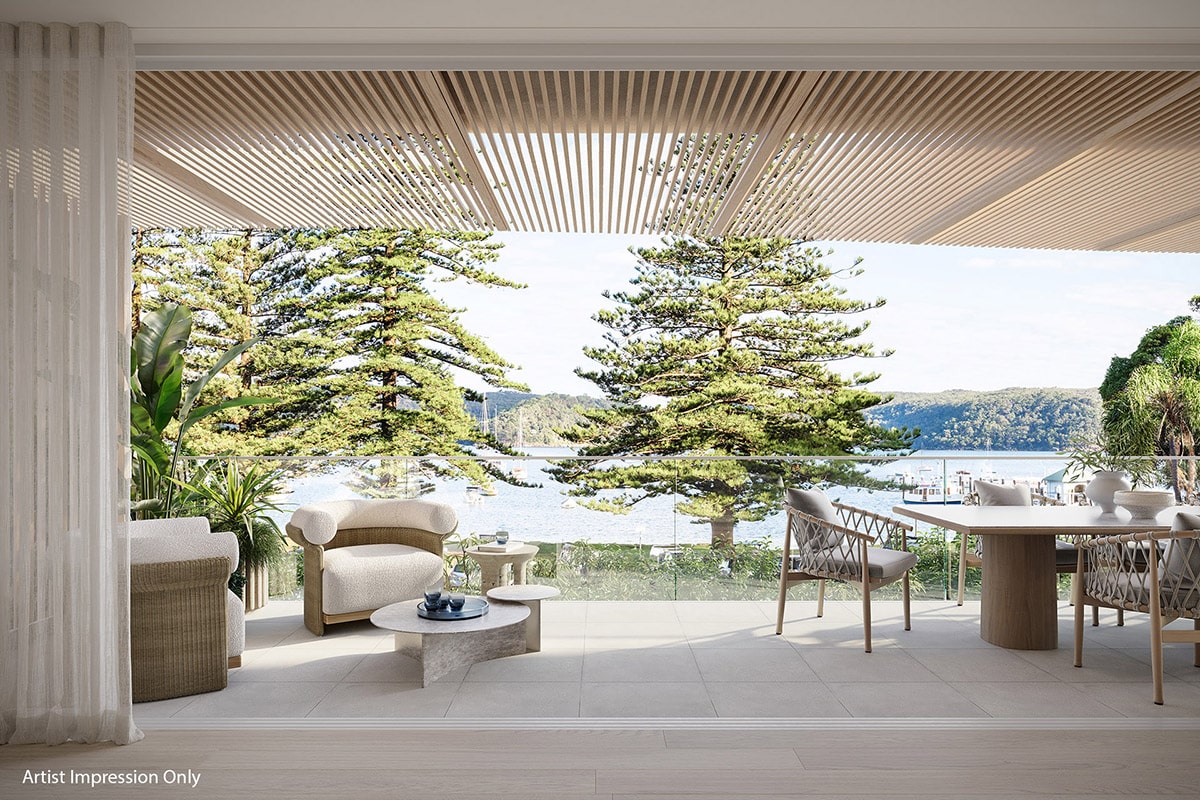
Soft thresholds between indoors and outdoors that invite movement and air.
Natural light and acoustics that create calm.
Communities that balance privacy with genuine connection.
Every decision becomes an act of foresight. The home must work not only for today but for every version of life yet to come — including the slower ones.
This mindset makes the “final home” one of the most sophisticated design briefs in the property world. It’s part architecture, part psychology, part art.
A Portrait of the Final Buyer
In the Australian ultra-luxury market, the final home buyer is usually between 55 and 75. Many are business founders or executives who have lived multiple property cycles. They’re financially secure but emotionally discerning.
For them, the final home is not about scale, it’s about coherence. Every room has a reason. Every material tells a story. The space must feel not only functional, but resolved.
They are drawn to homes that feel inevitable, as if they were always meant to be there, waiting.
From Ownership to Stewardship
One of the most interesting shifts among this demographic is a move from ownership to stewardship.
Buyers talk less about what they own and more about what they will leave behind. They want their final home to outlast them — environmentally, architecturally, and emotionally.
Sustainability, heritage sensitivity, and enduring design integrity have become key priorities. These are not buzzwords for this audience; they are moral imperatives.
As one Sydney downsizer put it recently: “I don’t want a house that screams success. I want one that whispers continuity.”
The Role of Time
The luxury of this stage of life is not money. It’s time.
Every design decision becomes a meditation on how time will be spent and felt. Morning light through the kitchen. Afternoon quiet on the terrace. Evenings softened by breeze and familiarity.
This temporal awareness influences material selection and layout. Homes designed for longevity favour surfaces that patina gracefully, technologies that simplify rather than distract, and layouts that can adapt as mobility, family, or energy shift.
Time becomes the true client.
Designing for the Soul
Architecture at this level often takes on a spiritual dimension — not religious, but deeply human.
The best homes invite stillness without sterility. They hold emotion without clutter. They breathe.
Designers like Luigi Rosselli and Madeleine Blanchfield speak often about “soulfulness” — the intangible quality that makes a space feel alive. In the context of a final home, soul is not an aesthetic flourish; it’s the result of proportion, texture, and restraint in perfect balance.
It’s what allows a person to walk in and say, “Yes. This is it.”
Real Estate Projects and the Architecture of Arrival
At Real Estate Projects, we recognise that this phase of the journey deserves reverence. The final home is not a transaction. It’s a culmination of decades of choices, labour, and longing.
That’s why we showcase developments that understand this depth — projects that combine livability, beauty, and spiritual intelligence.
For us, curating these homes means asking different questions: Does it age well? Does it hold light with kindness? Does it have presence without pretense?
When the answer is yes, we know it’s more than a property. It’s a life’s work, finished in stone and air.
The Art of Knowing You’re Home
In the end, the final move is about peace.
It’s the house that no longer needs improving. The one that feels both ending and beginning. The one where you can finally stop striving and start being.
That is the quiet luxury of completion, and perhaps the truest definition of home.