By Co-Founder Matt Grant
“The ache for home lives in all of us — the safe place where we can go as we are and not be questioned.” — Maya Angelou
Homes are never just buildings. They are statements of who we are now, and signals of who we hope to become. They shape our daily lives, our families, our communities, and even our cultural future.
And right now, as Australia grapples with one of the most significant housing shortages in its history, the question of what kinds of homes we build — and who they are for — has never been more urgent.
The Scale of the Challenge
The scale is staggering.
The National Housing Accord projects a need for 1.2 million new homes in the next five years. That’s not a statistic we can ignore — it’s a social and cultural imperative.
We simply cannot keep spreading outward. The suburban dream of endless land release is over. The infrastructure isn’t there. The environment can’t carry it. The only path forward is urban densification. The question is not if we densify, but how.
Will we do it artlessly, throwing up cookie-cutter boxes with little thought for lifestyle or culture? Or will we rise to the challenge and design densification as something that enhances how we live, uplifts our communities, and leaves a legacy of quality?
The Role of Premium Homes
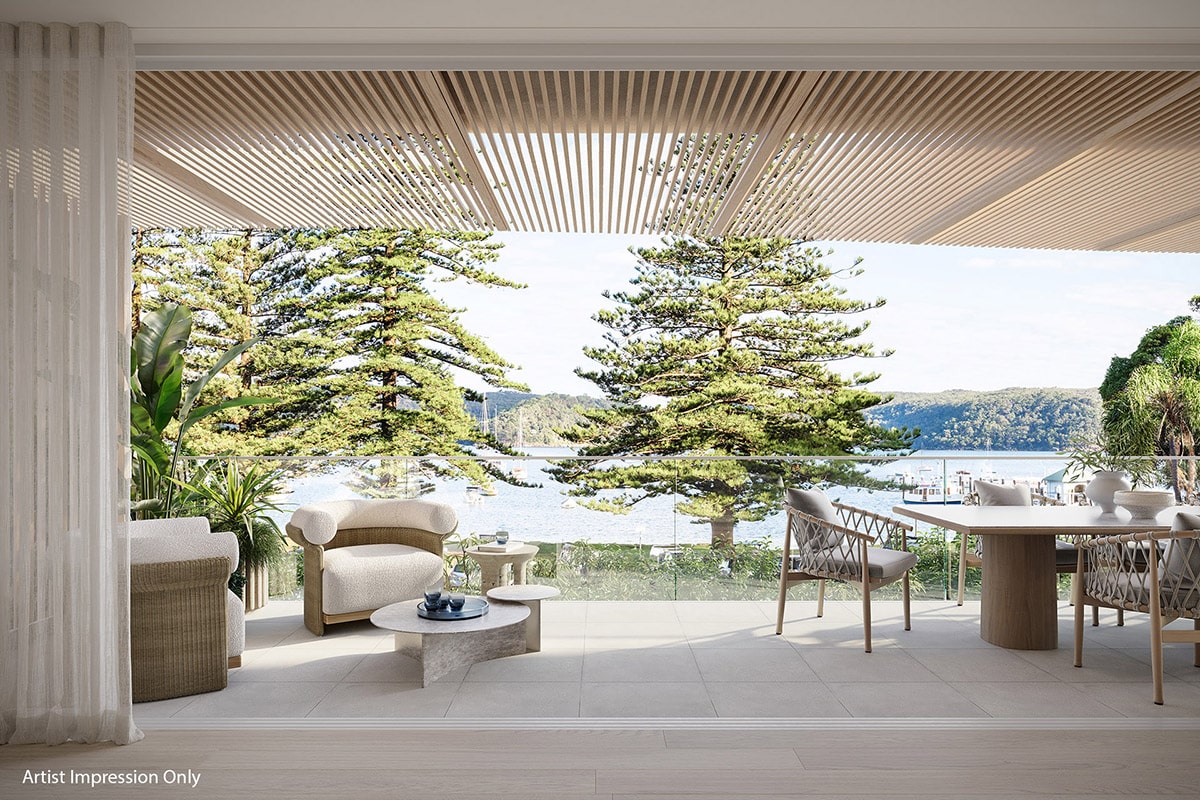
Premium developments — particularly in Sydneys premium markets— play a unique role in this. They are the prototypes of the future. They demonstrate what densification can look like when it is handled with care, vision, quality and artistry.
When you see a development that balances architecture with landscape, that integrates light and material in a way that dignifies human life, you realize: this is not just housing. This is cultural infrastructure. This is shaping how Australians live, age, and dream.
Developers, architects, and buyers like those in our community are at the forefront of shaping this future. We are not just building homes. We are building how we live now and in the future.
The Affordability Tension
But we cannot ignore the tension.
Sydney’s median house price has crossed $1.6 million. For many young Australians like myself, the dream of owning a family home is slipping further away every year. The millennial generation is being pushed to the regions — to Newcastle, the Central Coast, Orange, Byron, Bellingen, Geelong — in search of affordability.
On one hand, this opens up exciting opportunities for regional renewal. On the other, it exposes the urgent need for us to use the housing stock we already have more intelligently and equitably.
Family Homes are for Families
Here is what I believe, as clearly as I can say it:
Family homes are for families.
That means if you are past the family-raising stage, or never entered it, there is a profound opportunity — and, I would argue, a responsibility — to make space for the next generations.
That doesn’t mean loss. It doesn’t mean surrender. It means stepping into a home designed for where you are now.
For no-family households, for non-nuclear families, for young families just beginning, and for those post-family entering a new chapter, we need apartments and townhomes designed with intention. Increasingly, the future of housing in this country will be found in these spaces. And when done well, they don’t diminish lifestyle — they elevate it.
Reframing Downsizing
The word “downsizing” is misleading. It suggests shrinking, diminishing, stepping back.
Downsizing is not about giving something up. It is about transitioning assets into a home that can hold you — a place that supports independence, security, and dignity for your next chapter.
It’s about securing freedom now — lower maintenance, smarter design, vibrant community — while also releasing the family home back into the market for another family to grow and thrive in.
When you step into a premium apartment, you are not only enhancing your own life. You are also performing an act of community stewardship. You are making space.
Generational Ecology
Housing has to be understood as an ecology.
Families need houses.
Downsizers need apartments.
Young Australians need quality regional options.
Early families need flexible spaces.
Non-traditional households need to be included in our design thinking.
When one group clings to a stock type that no longer serves them, the entire ecology is distorted. But when each generation and household type moves into the right habitat, everyone benefits.
Regional Futures
I want to also speak to the regional story.
Young Australians are moving away from Sydney in record numbers. Affordability in the city is out of reach, but in regions there is opportunity. That’s why we believe so strongly in connecting people to quality regional new homes — projects that bring design integrity and lifestyle value to towns and communities beyond the metropolitan bubble. This isn’t about abandoning Sydney. It’s about expanding the map of what a good life looks like in Australia.
But this migration has consequences. It’s pushing regional people out of their own markets, driving up prices and creating fresh affordability pressures in towns that were once accessible.
That’s why I believe we need quality housing at all levels of the market — not just premium stock, not just entry-level stock, but an integrated ecology. And I believe we have a role in the premium sector: innovating with design, sustainability, and community integration in ways that ripple down and set benchmarks for the rest of the market.
In other words, we need to right-size Australia:
more houses,
at more income levels,
for more diverse situations and household types,
all made with quality, sustainability, and community in mind.
This is not about “more boxes.” It’s about designing homes that genuinely support how people live, now and into the future.
Shaping the Future Together
This is the core message: housing is not just an economic problem, nor just a design challenge. It is a cultural project.
Every development, every downsizer decision, every apartment built is part of shaping what it means to live well in this country.
Developers, designers, buyers — we are writing this story. The homes we bring to life now will define the future Australia inherits.
And so we must work with responsibility, imagination, and care. We must hold the tension between market forces and cultural needs. We must make choices that not only benefit ourselves, but also open space for the generations coming after us.
Because I believe its more than just buying and selling, it's shaping how we live today, and tomorrow.
“We shape our buildings; thereafter they shape us.” — Winston Churchill
Read more from Right-Sizing Australia Series
• Right-Sizing Australia — Rethinking the ecology of housing and generational balance
• The Silent Breakdown in New Development Sales — Why communication fails between developers, marketers, and agents
• Beyond Collateral — Redefining the purpose and philosophy of project storytelling
• The Future of Place — Reimagining belonging, context, and culture through design
• Living Systems — How regenerative architecture is reshaping sustainable development
• The Invisible Architecture of Connection — Housing and the neuroscience of human belonging
• Australia is Growing Up — Demographic shifts, plural identities, and the new language of inclusion
• The New Story of Home — Evolving ideas of lifestyle, family, and the meaning of place