By Co-Founder Matt Grant
“The future will belong to the nature-smart—those who can merge the logic of technology with the wisdom of ecology.” — Janine Benyus
There’s a quiet revolution unfolding in how we think about cities, buildings, and homes.
The old view of development was mechanical: land in, product out. The new view is biological.
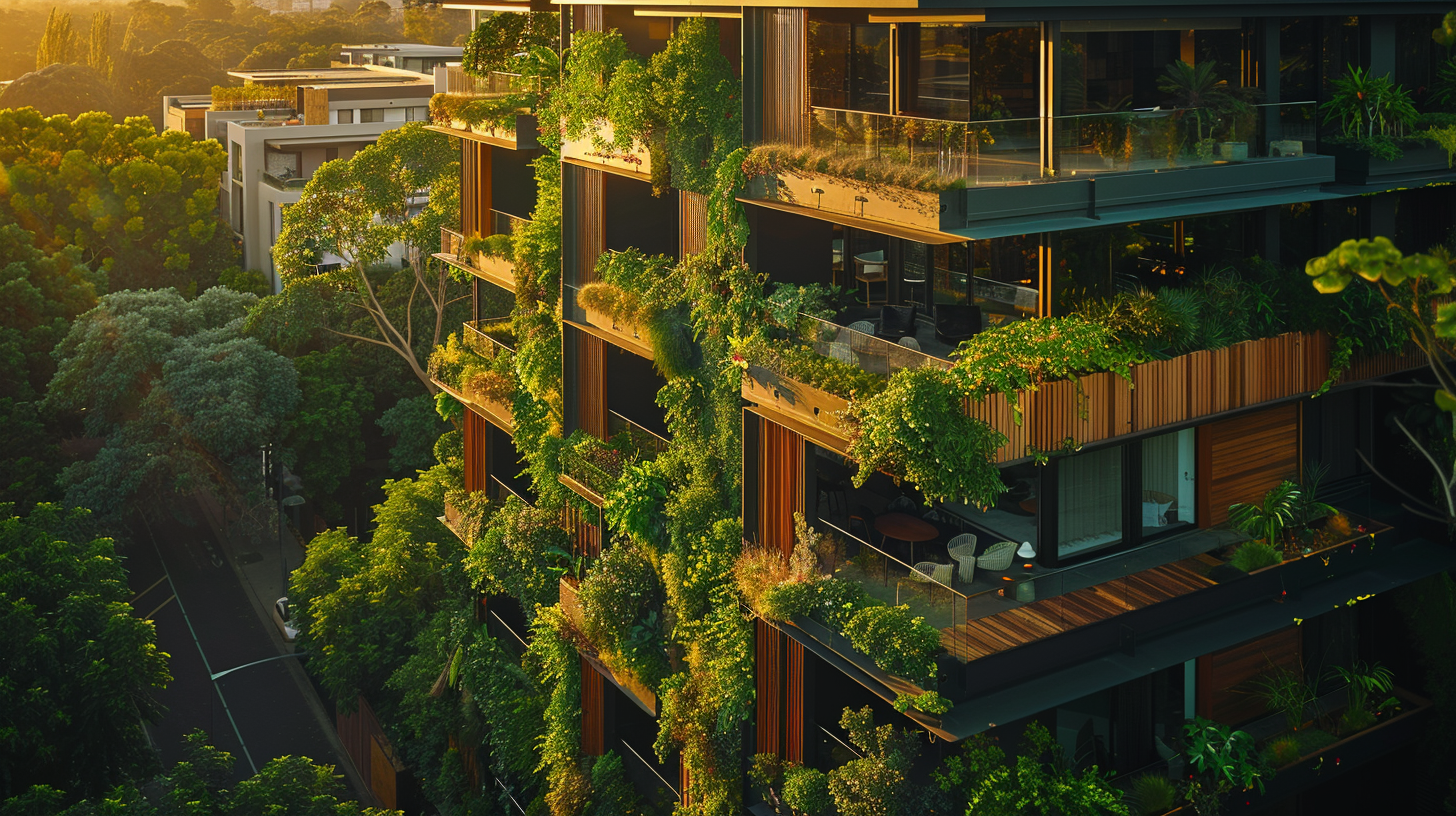
Across architecture, planning, and design, a new vocabulary is emerging—regeneration, reciprocity, integration. We’re beginning to see housing not as a product sitting on land, but as an organism within it: a living system of energy, materials, and relationships.
The Shift from Mechanistic to Living Thinking
For most of modern history, the built environment has been treated like a machine.
If something broke, we fixed the part; if we needed more, we built bigger. But the planet is showing us the limits of that thinking.
In Australia, buildings account for over 25% of national carbon emissions, according to the CSIRO. Construction waste now exceeds 27 million tonnes a year—more than any other industry.
The solution isn’t just better materials or greener marketing. It’s a new paradigm: thinking of the built environment as part of an ecological cycle, not apart from it.
This shift mirrors a wider cultural evolution. Science is rediscovering what Indigenous knowledge has long held true—that life is relational, not linear. Systems thrive through feedback and balance, not dominance and extraction.
Learning from Nature’s Intelligence
Nature has spent 3.8 billion years perfecting design. It wastes nothing, builds beauty into function, and sustains infinite complexity through cooperation.
The emerging field of biomimicry, pioneered by thinkers like Janine Benyus, studies these natural systems for answers to human challenges. From termite mounds inspiring passive cooling systems to coral reefs informing low-carbon concrete, architects and engineers are now turning to biology for blueprints.
Closer to home, Melbourne’s Nightingale Housing model has become an emblem of ecological intelligence—shared energy systems, minimal waste, and materials chosen for both beauty and biodegradability.
In Byron Bay, Habitat has evolved as a hybrid precinct of homes, studios, and retail built around shared infrastructure and walkable design, proving that density and ecology can coexist gracefully.
These projects work because they mimic life: diversity, feedback, and adaptability.
The Data of Regeneration
The logic of ecology isn’t just poetic—it’s measurable.
A 2023 University of New South Wales study found that apartments with integrated greenery reduce ambient temperature by up to 4°C and cut energy use by 20% annually.
A 2024 WELL Building Institute report showed that buildings designed for biophilic engagement—views of nature, natural light, and tactile materials—can improve cognitive function by 15% and reduce absenteeism by 30%.
Regenerative design, once dismissed as niche, now has hard economics behind it. Buyers are willing to pay more for homes that feel healthier and perform better.
According to the Property Council of Australia, sustainable projects achieve sale premiums of 10–20% and outperform the market on long-term value retention.
The numbers are catching up to what intuition always knew: what’s good for the earth is good for us.
From Sustainability to Symbiosis
Sustainability asked how we could minimise harm.
Regeneration asks how we can create benefit.
The next era of development will not aim for neutrality, but reciprocity—buildings that generate energy, filter water, and restore ecosystems.
Already, Australian projects like Frasers Property’s Central Park in Sydney have set benchmarks with vertical gardens, greywater recycling, and renewable energy integration.
But regeneration is not only environmental—it’s cultural. It asks how developments can revive communities, foster belonging, and regenerate meaning in the places we live.
A building that grows trees is good.
A building that grows trust is better.
The Spiritual Ecology of Building
At its deepest level, this movement reflects a spiritual truth: everything that exists is connected.
The wisdom traditions of every culture have said it differently—as above, so below; all my relations; Indra’s net—but the principle is the same. Life is a web, not a hierarchy.
When we design housing that honours that truth, something subtle shifts. Concrete becomes consciousness expressed through form. Architecture becomes an act of participation, not control.
To build well is to pray with your hands.
Real Estate Projects as the Living Network
In this new paradigm, Real Estate Projects functions not as another marketing platform, but as an intelligent ecosystem.
We connect developers, architects, and buyers who share the same intention—to build in alignment with nature’s intelligence.
Our curated projects reveal how design, data, and consciousness can co-exist: homes that reduce footprint, improve wellbeing, and foster community without sacrificing beauty.
We see every listing as a living node in a larger system of renewal—a place where creativity, sustainability, and spirituality converge.
In practice, this means highlighting developments that use local materials, green energy, and thoughtful scale; telling the story of how design teams collaborate; and showing buyers how their decisions ripple outward into culture and ecology.
Real Estate Projects is not separate from the system—it is the system, made visible.
The Next Frontier
The future of real estate will belong to those who understand interdependence.
Developers who design like ecologists.
Buyers who choose like stewards.
Platforms that connect like living networks.
We are moving beyond sustainability toward symbiosis—an age where every home is a participant in the living fabric of the world.
Because buildings are not inert. They breathe, they influence, they remember. And when we build with that awareness, the cities of tomorrow will no longer compete with nature. They will complete it.
Read more from Right-Sizing Australia Series
• Right-Sizing Australia — Rethinking the ecology of housing and generational balance
• The Silent Breakdown in New Development Sales — Why communication fails between developers, marketers, and agents
• Beyond Collateral — Redefining the purpose and philosophy of project storytelling
• The Future of Place — Reimagining belonging, context, and culture through design
• Living Systems — How regenerative architecture is reshaping sustainable development
• The Invisible Architecture of Connection — Housing and the neuroscience of human belonging
• Australia is Growing Up — Demographic shifts, plural identities, and the new language of inclusion
• The New Story of Home — Evolving ideas of lifestyle, family, and the meaning of place