By Co-Founder Matt Grant
“The opposite of addiction is not sobriety. The opposite of addiction is connection.” — Johann Hari
We are living through a paradox. Never in history have humans been more connected digitally, yet more isolated physically. Across Australia, the quiet epidemic of loneliness is reshaping how we live, age, and build.
The future of housing will not be defined only by energy ratings or material efficiency, but by its ability to create connection; between neighbours, generations, and the inner life of the people who inhabit it.
The Loneliness Epidemic
In 2024, the Australian Institute of Health and Welfare reported that one in three adults experiences problematic loneliness, with the highest rates among single-occupant households and older Australians. The number of people living alone is projected to reach 3.7 million by 2041, driven by an ageing population and changing family structures.
The consequences are not abstract. Loneliness is now recognised as a public health crisis, increasing the risk of premature death by 26%, comparable to smoking 15 cigarettes a day.
The longest-running study on human wellbeing, Harvard’s Study of Adult Development, spanning more than 80 years, found that close relationships are the single most reliable predictor of long life and happiness. Not wealth, not fame, not health — connection.
And yet, our housing system has largely ignored this truth.
The Architecture of Isolation
Over the past fifty years, the structure of our neighbourhoods has quietly eroded the architecture of connection.
Detached homes on large suburban blocks have produced privacy at the expense of community. Urban density, executed without empathy, has delivered proximity without intimacy. Even the apartment boom has too often prioritised yield over human scale, creating towers full of people who never meet.
We designed for efficiency, not encounter.
The result is a built environment optimised for solitude; and a society hungry for belonging.
The Neuroscience of Connection
Modern neuroscience has confirmed what poets and mystics have always known: we are wired to connect.
Human touch releases oxytocin, the “bonding hormone,” which regulates stress and immune function. Eye contact synchronises neural rhythms between people. Shared laughter activates reward centres in the brain more powerfully than money.
But isolation does the opposite. Chronic loneliness triggers inflammation, weakens cardiovascular health, and shrinks the hippocampus — the part of the brain associated with memory and learning.
Even architecture itself influences our capacity for connection. Studies from the University of Melbourne’s Centre for Urban Research show that streets with active frontages, green space, and walkability foster up to 25% more neighbour interactions per week.
Design either amplifies or anaesthetises our social instincts.
Rebuilding the Architecture of Belonging
Around Australia, a quiet movement is responding.
Projects like The Ponds in Sydney’s northwest are using shared green corridors and community events to create interaction among thousands of residents.
In Fremantle, the East Village development integrates co-housing models with communal gardens and solar sharing, blending sustainability with social inclusion.
In Byron Bay, smaller-scale communities like Habitat demonstrate how thoughtful density and shared space can cultivate lifestyle, not loneliness.
These developments don’t just sell homes, they build micro-societies. They show that when connection is designed into the environment, wellbeing follows.
This is the true promise of lifestyle development: not luxury as isolation, but lifestyle as belonging.
The Role of Storytelling and Identity
Belonging doesn’t happen by proximity alone. It happens when people see themselves reflected in their environment, in its design, culture, and narrative.
That’s why storytelling has become essential to real estate marketing. Buyers are no longer just looking for architecture; they’re looking for affinity.
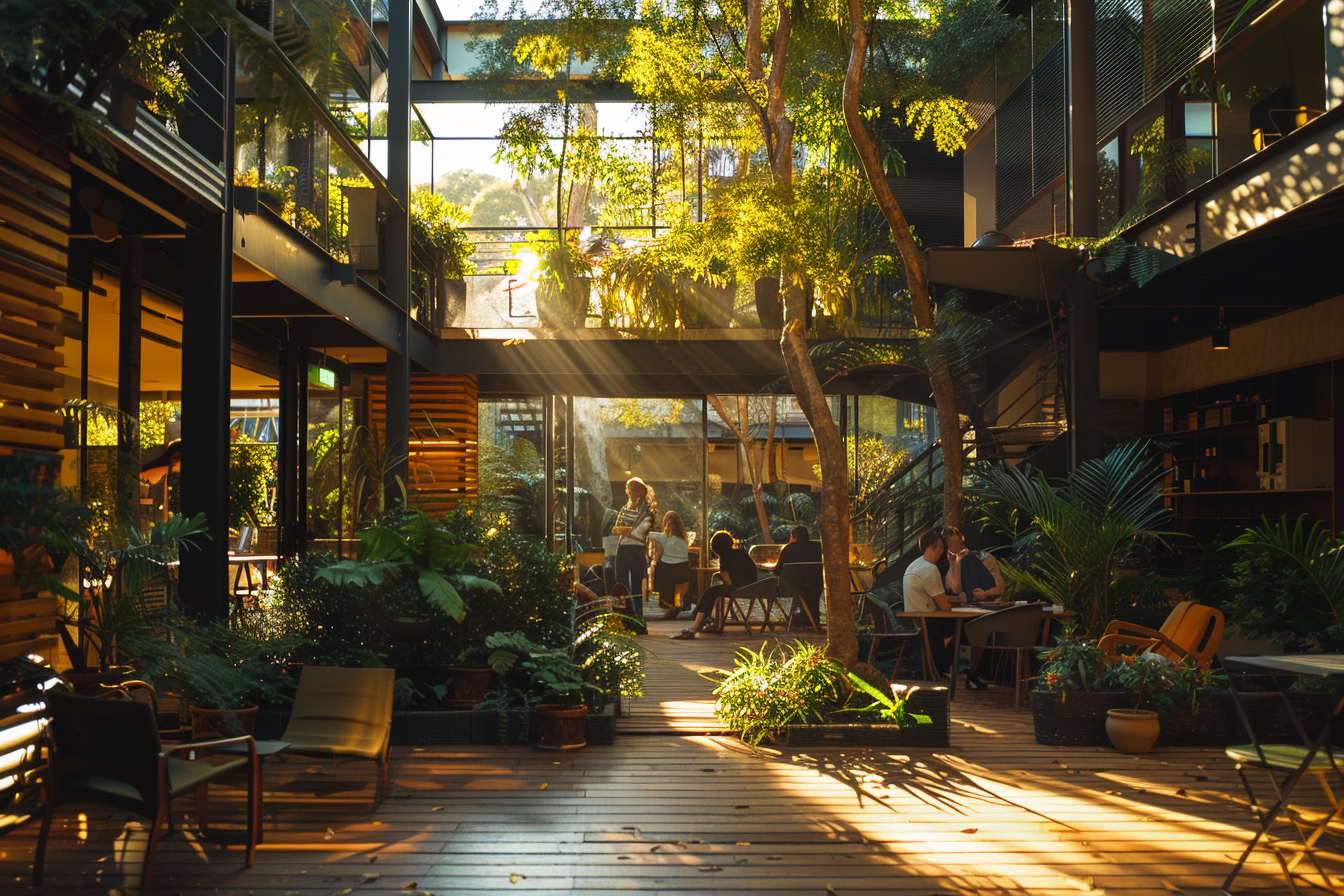
The best projects don’t just show renderings of buildings. They show life unfolding; friends sharing coffee in the courtyard, children playing safely, retirees tending to native gardens. They offer mirrors of possibility.
When we see people who look like us, dream like us, or live as we hope to live, something awakens.
We start to imagine ourselves in relation.
The Spiritual Dimension of Connection
At its heart, connection is sacred.
Every wisdom tradition describes the same truth in different words, that separation is illusion. The universe is an interconnected field, and human beings are its conscious expression.
Loneliness, then, is not merely emotional pain; it is metaphysical homesickness. It is the soul remembering what unity feels like.
When housing, planning, and storytelling recognise this, when we design for inclusion, for recognition, for shared joy; we begin to heal something much larger than ourselves.
How Real Estate Projects Helps Rebuild Connection
At Real Estate Projects, we see connection as the invisible foundation of every successful development.
Our platform exists to bridge the space between people, place, and purpose. We curate projects that embody human-scale design, genuine community, and shared lifestyle values, homes that nurture life in all its forms.
Through our editorial stories, visual storytelling, and digital infrastructure, we bring visibility to developments that build culture as well as architecture.
We are not simply matching buyers to property. We are restoring trust, context, and conversation to the process, the human fabric behind every sale.
Because in an industry often obsessed with visibility, our work is about the unseen, the architecture of belonging.
The Way Forward
Australia’s housing future will be decided not only by how many homes we build, but by how those homes make people feel.
The next evolution of design is not technological; it is relational. The best developments will create conditions for serendipity, not just shelter. They will bring people closer together; across thresholds, generations, and differences.
Connection is not an add-on. It is the foundation of a liveable society. And when we build with that in mind, our homes stop being containers for life and start becoming instruments of it.
Because the most important architecture is the one we cannot see, the invisible architecture of connection.
Read more from Right-Sizing Australia Series
• Right-Sizing Australia — Rethinking the ecology of housing and generational balance
• The Silent Breakdown in New Development Sales — Why communication fails between developers, marketers, and agents
• Beyond Collateral — Redefining the purpose and philosophy of project storytelling
• The Future of Place — Reimagining belonging, context, and culture through design
• Living Systems — How regenerative architecture is reshaping sustainable development
• The Invisible Architecture of Connection — Housing and the neuroscience of human belonging
• Australia is Growing Up — Demographic shifts, plural identities, and the new language of inclusion
• The New Story of Home — Evolving ideas of lifestyle, family, and the meaning of place