By Co-Founder Matt Grant
“The universe is not made of things; it is made of relationships.” — Carlo Rovelli
The housing crisis isn’t just a numbers problem. It’s a meaning problem.
We’ve built faster than we’ve thought. We’ve measured success in square metres instead of soul. And somewhere between the marketing deck and the skyline, we forgot that every building is a mirror; a reflection of what a culture believes about itself.
But that story is changing.
A new generation of developers, architects, and storytellers is remembering that real estate is not just an economic act. It’s a creative one.
We are standing at the edge of a renaissance; one that will redefine what it means to build, to belong, and to live well in this country.
The End of the Mechanical Era
For most of modern history, development has been treated like a machine: inputs, outputs, margins, timelines. It worked, until it didn’t.
We now face the cultural fatigue of that efficiency. Housing has become commodified, disconnected from its purpose, and stripped of the imagination that once made it aspirational.
The crisis we’re in isn’t only about affordability. It’s about identity.
We’ve designed cities that are efficient but anxious, homes that are luxurious but lonely, marketing that’s polished but hollow.
And yet, within the cracks of that old order, new light is breaking through.
The Emergence of Living Intelligence
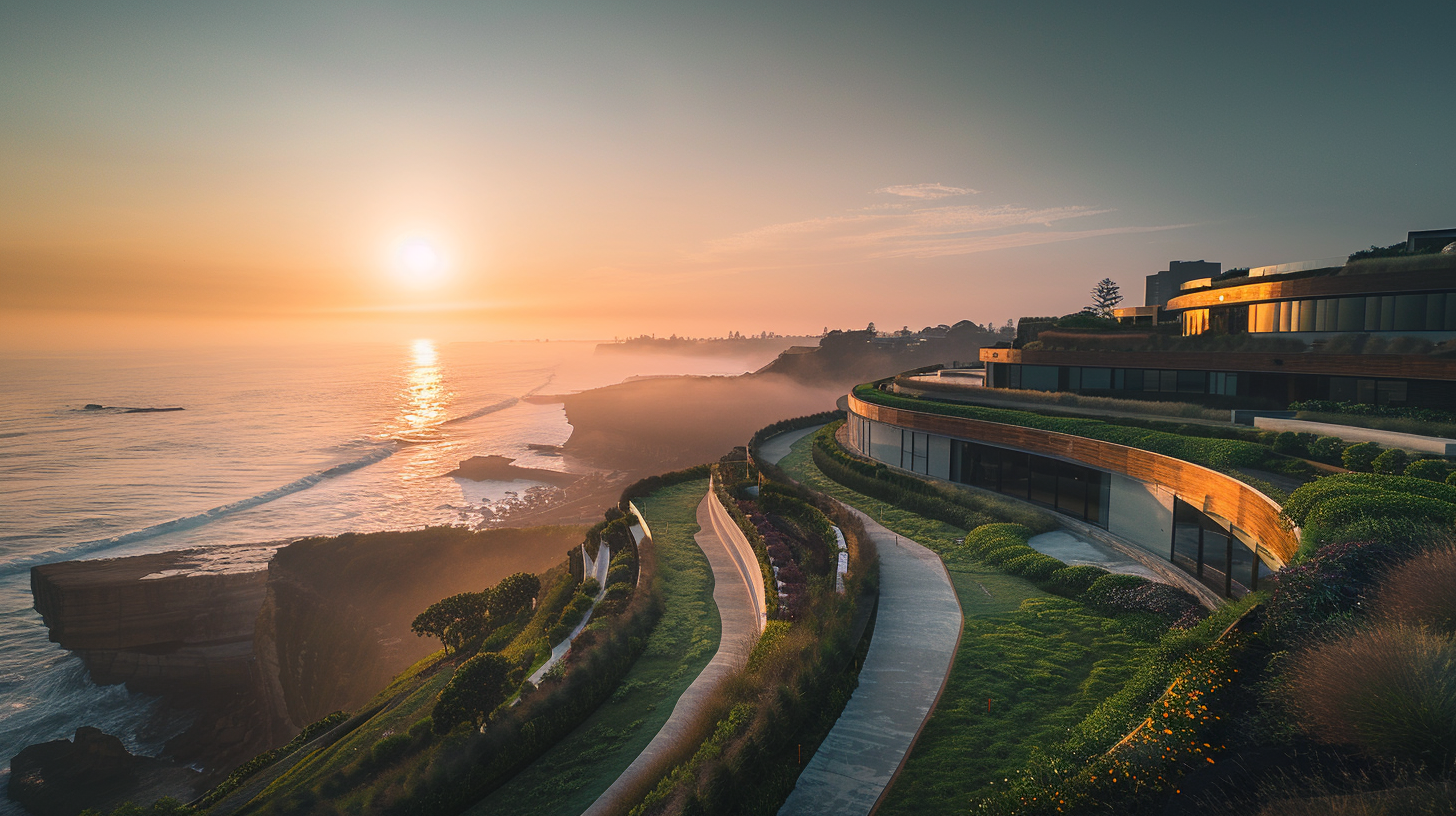
Across the country, something extraordinary is happening. Projects like Nightingale Village in Melbourne, Barangaroo’s rebirth in Sydney, and Byron Bay’s Habitat precinct are proving that development can restore as much as it consumes.
These places are not built like machines; they’re built like organisms. They breathe, connect, and evolve.
They’re part of a movement explored in Living Systems, an awakening to the idea that architecture can behave like ecology, that a building can act as a participant in life, not a parasite on it.
This is design as living intelligence. And it’s not a trend. It’s a transformation.
From Product to Worldbuilding
We’re not in the business of selling property anymore. We’re in the business of building worlds.
Every development is a miniature civilisation; a set of values expressed through form.
Whether that civilisation cultivates beauty, inclusion, and belonging depends entirely on the consciousness behind it.
As argued in The Future of Place, people no longer buy postcodes. They buy contexts. They choose environments that affirm who they are and what they love.
The developments that will endure are those that treat buyers not as transactions, but as citizens of a shared story.
Real Estate Projects was founded to tell those stories — to connect vision with understanding, and information with emotion.
The Architecture of Belonging
The most advanced infrastructure in the world is invisible. It’s trust. It’s empathy. It’s connection.
As explored in The Invisible Architecture of Connection, loneliness has become one of Australia’s most pressing social issues — yet we continue to build environments that isolate rather than unite.
The next frontier of real estate will not be technological. It will be relational. The developments that succeed will be the ones that create belonging: places that invite eye contact, conversation, and shared ritual.
Because the truest measure of a building isn’t how tall it stands, but how well it holds us.
The Role of Story and Beauty
Every home begins as an idea — a conversation between imagination and place. To bring that idea to life is an act of art, not administration.
As discussed in Beyond Collateral, storytelling is not a marketing tool; it’s the nervous system of a project. It gives coherence to design, to intention, and to emotion.
And beauty (the most neglected force in modern development) is not cosmetic. It’s structural.
When something is beautiful, it works. It calms the nervous system. It invites stewardship. It endures. Beauty is the original sustainability metric.
The Creative Responsibility
Every person in this industry is a builder of reality. Developers are composers. Architects are poets in concrete. Marketers are interpreters of meaning. Buyers are co-authors of the future.
Our choices (from the materials we select to the stories we tell) shape the emotional and spiritual architecture of the nation.
That’s why Real Estate Projects exists: to help build with intelligence, intention, and integrity. To act as a bridge between the practical and the poetic. To remind an industry obsessed with metrics that imagination is the ultimate resource.
Because the next revolution in real estate will not come from AI or automation. It will come from awareness.
The Call to Build Differently
This is a turning point. We can keep building boxes. Or we can build places that help people become more human.
We can chase velocity. Or we can cultivate vitality.
We can repeat what’s profitable. Or we can create what’s meaningful.
The Creative Renaissance of Real Estate asks us to choose the latter. To bring design, story, and consciousness back into alignment. To treat every project as an act of culture-making.
Because every home we build is a message to the future.
What do we want it to say?
Read more from Right-Sizing Australia Series
• Right-Sizing Australia — Rethinking the ecology of housing and generational balance
• The Silent Breakdown in New Development Sales — Why communication fails between developers, marketers, and agents
• Beyond Collateral — Redefining the purpose and philosophy of project storytelling
• The Future of Place — Reimagining belonging, context, and culture through design
• Living Systems — How regenerative architecture is reshaping sustainable development
• The Invisible Architecture of Connection — Housing and the neuroscience of human belonging
• Australia is Growing Up — Demographic shifts, plural identities, and the new language of inclusion
• The New Story of Home — Evolving ideas of lifestyle, family, and the meaning of place