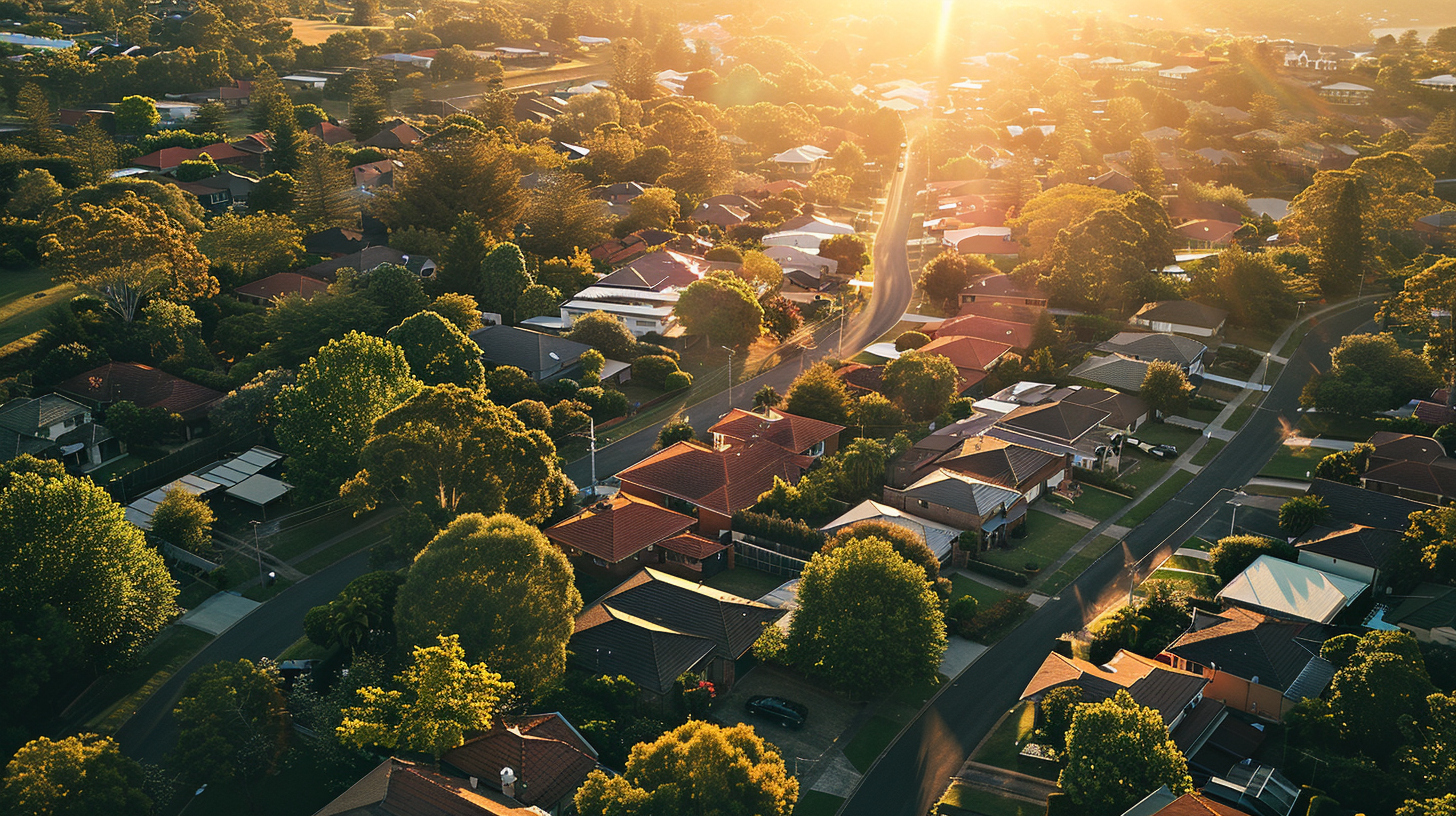
Sydney has always been a city defined by its relationship to land. From the terrace rows of the Inner West to the sandstone escarpments of the Northern Beaches, our homes have never been just shelters — they’ve been investments, inheritances, and cultural mirrors. But as the housing market evolves and urban space becomes scarcer, a quiet shift is occurring. Many ordinary homes are now worth more as development opportunities than as dwellings. The question is, would you know if yours was one of them?
At Real Estate Projects, we see this moment every day. A homeowner inherits a post-war bungalow on a large block in Mona Vale, or a couple prepares to downsize from a 1960s house in Lane Cove. The property is comfortable but ageing, its value tied less to the home itself than the land beneath it. What few realise is that their family home may be a prime development site — a piece of the next generation of Sydney housing.
The Pressures Behind the Shift
Sydney’s population has grown by over 1.2 million people in the past decade, and the NSW Department of Planning projects another 1.7 million by 2041. Yet developable land has not increased. The NSW Government’s housing targets call for 377,000 new dwellings by 2029, and councils from Pittwater to Parramatta are under pressure to deliver density in already established areas.
In practical terms, this means that the real growth opportunity is not at the city’s edge but within its existing fabric. Zoning adjustments, medium-density overlays, and senior living provisions are unlocking value in places that were once considered fully built-out.
According to CoreLogic, over 60% of new Sydney apartments built since 2015 have been developed on land that previously held detached housing. In suburbs like Frenchs Forest, Balgowlah, and Gladesville, entire streets have transformed through consolidation — neighbours combining adjacent lots to create boutique residential projects.
How to Know if Your Home Has Potential
There are a few key indicators that suggest your home could be of interest to developers. None of them are speculative; all depend on measurable characteristics.
Zoning is the foundation. In Sydney, properties zoned R3 (medium density) or R4 (high density) often carry significant latent value. So too do R2 sites adjacent to higher-density zones, particularly when councils are considering rezoning for housing diversity or seniors’ accommodation.
Land size and shape are critical. A typical dual-occupancy development may require 600–700 square metres with adequate frontage, while apartment sites often start from 1,000 square metres and up. Corner sites or those with wide, flat frontages are especially sought after because they simplify access and design compliance.
Orientation and slope matter more than most people realise. North-facing sites are naturally efficient, while steep or irregular lots can add complexity and cost. Services such as sewer and stormwater location also affect feasibility.
And finally, neighbours. Developers value clusters of compatible lots. A single block in isolation may hold promise, but when two or three neighbours align, the multiplier effect can be extraordinary.
[link to: The Anatomy of a Good Site: What Developers Really Look For]
The Emotional Reality
For homeowners, the idea that their house is a development site can feel uncomfortable. It reframes a place of memory as a financial instrument. Yet acknowledging that dual identity — home and asset — is part of modern property literacy.
Across Sydney’s northern and eastern suburbs, we’ve met families who hesitated for years before realising what they held. A single-level home on 900 square metres in Narrabeen recently sold for 40% above comparable house prices because it was part of a future apartment consolidation. The owner, initially reluctant, now lives in one of the completed residences — a downsizer apartment overlooking the same trees she once saw from her garden.
Recognising development potential doesn’t mean betraying the sentimental value of a home. It means honouring its future use.
[link to: From Family Home to Future Project: How to Step Back Without Losing Legacy]
How Developers Think
When developers assess a potential site, they’re not just looking at today’s zoning or building envelope. They’re projecting five to ten years ahead. They factor in evolving planning controls, infrastructure upgrades, and buyer demand patterns.
For example, the upcoming Beaches Link tunnel and proposed rezonings around Brookvale have already begun to shift feasibility models. Areas like Dee Why and Warriewood, once considered fully priced, still hold untapped density allowances under SEPP (Senior Living) and R3 provisions.
Good developers look for sites that allow architectural efficiency — flat terrain, strong aspect, and minimal excavation. They also consider the local social and environmental context. A small-scale, beautifully designed project in a high-amenity suburb will often outperform a larger, generic one in a less connected area.
[link to: How to Make a Deal: The Art and Timing of Selling to a Developer]
The Risks of Going It Alone
The complexity of feasibility means that selling to a developer without guidance is risky. Inexperienced sellers often anchor to unrealistic expectations or agree to conditional contracts that never materialise.
We’ve seen cases where homeowners held out for inflated promises tied to uncertain planning outcomes, only to miss the market entirely when interest rates shifted. We’ve also seen the opposite — quick off-market sales at prices well below potential because the seller didn’t understand the site’s true value in context.
That’s why Real Estate Projects exists. Our role is to bring literacy, data, and transparency into a process that’s too often opaque. We work with both homeowners and reputable developers, ensuring that potential is maximised while communication remains ethical and clear.
[link to: The Red Flags: What to Watch Out For When Selling Your Home as a Development Site]
When Neighbours Align
One of the most powerful trends reshaping Sydney’s middle-ring suburbs is neighbour collaboration. When two or more adjoining owners recognise shared potential, the cumulative value can exceed what any individual block could achieve.
This kind of consolidation — often called a “backyard collective” — requires coordination, trust, and professional mediation. We’ve helped groups of residents in Avalon, Gladesville, and Ryde navigate collective sales that turned family homes into architecturally designed townhomes, each owner retaining an equity share in the finished project.
Handled well, it’s a model of cooperative prosperity. Handled poorly, it can fracture friendships and stall progress.
[link to: When the Neighbours Come Knocking: The Rise of the Backyard Collective]
The Bigger Picture
Every major city eventually reaches a moment where growth depends not on expansion but on reinvention. Sydney is there now. We are moving from a city of detached homes to a city of designed density, where the quality of planning, collaboration, and vision will determine liveability for the next generation.
For homeowners, this is both an opportunity and a responsibility. Unlocking value doesn’t have to mean selling to the highest bidder. It can mean engaging with developers who respect context, architecture, and community fabric — people committed to improving the suburbs they build in.
At Real Estate Projects, we believe that’s where the future of Sydney lies: in the space between private ownership and public contribution, between individual aspiration and collective need.
Read more from the Site Potential Series
• Site Potential Series — Unlocking hidden value in the land beneath your feet
• When the Neighbours Come Knocking — How Sydney’s backyard collectives are reshaping development
• The Anatomy of a Good Site — What developers really look for when assessing potential
• Timing and Market Cycles — When to sell, when to hold
• Unlocking Hidden Value — Is your home a development site?
• From Family Home to Future Project — How to step back without losing legacy
• The Red Flags — What to watch out for when selling your home for development
• Legal and Tax Essentials — Understanding CGT, GST, and option contracts
• How to Make a Deal — The art and timing of selling to a developer